

In the photograph, the diamond looks perfect. In your hand, it does something the photograph could never promise: it changes.
A slight turn brings a bright flash. Another reveals a pattern of light and shadow. The stone has not become larger or acquired a better certificate. You have simply moved.
For anyone choosing white diamond jewelry, that small moment deserves more attention. A diamond is not only an object to measure. It is something you will see through an entire day of changing light.
Sparkle is a moving experience
GIA separates three aspects of appearance: brightness, the light returned by a diamond; fire, the flashes of spectral color; and scintillation, the changing flashes and patterns seen with movement. Cut influences how these effects come together.
You do not need to memorize the vocabulary before trying on a ring. Use it to describe your preference. Do you love quick, lively flashes, or an appearance that feels calmer and more architectural? Saying what you see is more useful than assuming everyone should prefer the same effect.
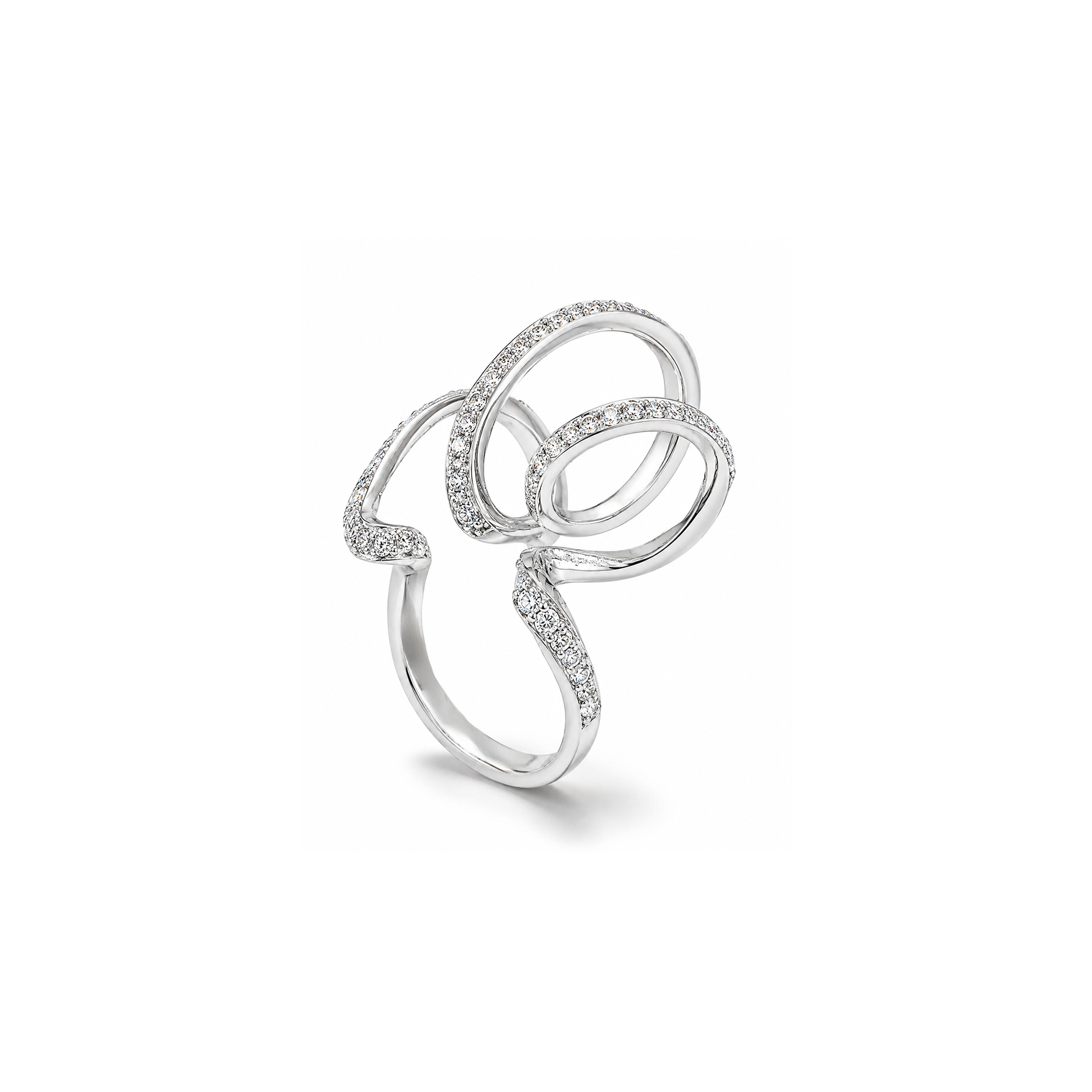
SPIRAL Ring – White by AMIRAMIR. Official brand image; not a demonstration of a specific cut grade.
A shape is the beginning, not the verdict
An oval outline may suit your eye. A round outline may feel familiar. Neither description tells the entire story of how an individual diamond handles light.
GIA distinguishes shape from cut quality. Its overall cut grading system described here applies to standard round brilliant diamonds in the D-to-Z color range; do not assume every fancy shape receives that same overall grade.
For a buyer, the practical lesson is simple: compare the actual stones, not only the category names.
Leave the spotlight for a moment
Ask to view the piece in more than one ordinary lighting condition. Observe it face-up, then move it gently. A still image and a short video can be useful, but neither reproduces the full experience of seeing a jewel yourself.
Keep the comparison fair. Look at pieces under the same light and at a similar distance. If one photograph is dramatically brighter than another, you may be judging the photography as much as the diamond.
Your task is not to perform a laboratory assessment. It is to learn what attracts your attention and then ask informed questions about the particular stone.

Light, rhythm and contrast in architecture. Photograph by Laura Tancredi / Pexels. Used under the Pexels license.
Choose for the life around it
A diamond may spend more time beside a shirt cuff than an evening gown. Think about your usual surroundings: daylight at a desk, a restaurant in the evening, a hand moving while you speak.
Try the jewelry with the clothes you actually wear. Check the height of a ring setting and how the piece feels on your hand. A striking first impression matters, but so does wanting to wear it again tomorrow.
Let the report and your eye do different jobs
A grading report provides information that a photograph cannot establish. Your eye tells you which appearance you enjoy. Neither needs to replace the other.
Ask about the stone’s identification and available documentation, and request an explanation of any unfamiliar grading terms. Avoid treating a seller’s use of “white” as a complete color description; ask what the report actually says.
Explore the flowing silhouette of SPIRAL Ring – White, then book an AMIRAMIR appointment to explore the pieces and ask about their individual details.
The diamond that stays with you may be the one you remember in motion.
Technical reference: GIA, Diamond Cut: The Wow Factor. Styling and viewing suggestions are editorial guidance, not a grading procedure.


